Sustainability Starts Before the Product is Installed
Sustainability is not only about choosing durable workplace matting. It is about choosing the right anti-fatigue mat from the very beginning.
In demanding working environments, poor anti-fatigue mat selection and incorrect installation can lead to unnecessary waste, reduced product lifespan, avoidable replacements and increased operational costs. Even high-quality ergonomic matting can fail when the environment has not been properly assessed or the matting has not been installed correctly.
This is why site visits and professional anti-fatigue mat installation play such a critical role in workplace sustainability. They help ensure that anti-fatigue matting is correctly specified for the environment, installed to perform as intended and capable of delivering long-term value from day one.
Getting the right mat first time reduces waste, improves operational performance, protects employees and supports a more sustainable approach to workplace safety and ergonomics.
For businesses looking for the most suitable anti-fatigue matting, COBA offers a wide range of anti-fatigue matting designed for different workplace environments.
The Real Problem isn’t Standing. It’s the Surface Beneath it
Millions of people across manufacturing, retail, logistics and hospitality spend the majority of their working day on their feet.
The issue is not standing itself, but the hard flooring surfaces employees stand on for prolonged periods of time.
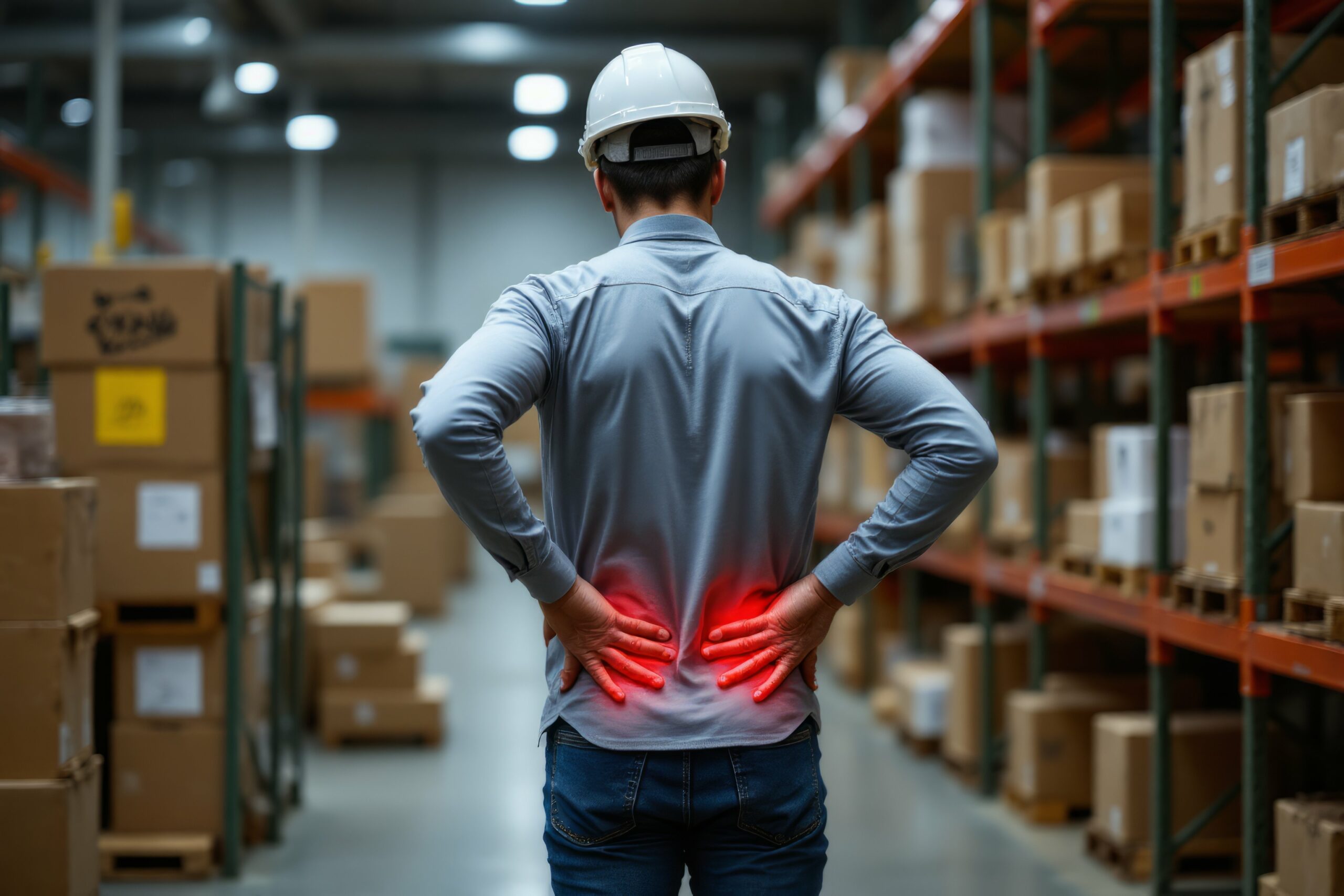
Workers can spend up to 1,880 hours per year standing on hard floors, contributing to fatigue, lower back pain, reduced circulation and musculoskeletal disorders, which are among the leading causes of workplace absence.
For employers, this is not simply a comfort issue. It is an operational and health and safety consideration that directly impacts employee wellbeing, productivity and long-term workplace performance.
Choosing the right anti-fatigue mat helps create a more supportive standing surface, reducing the impact of hard floors and improving comfort throughout the working day. For more information on how anti-fatigue matting works, read COBA’s guide on what anti-fatigue matting is.
When Good Intentions Create Bigger Problems
Many businesses attempt to solve workplace fatigue issues by introducing anti-fatigue matting or ergonomic matting without fully assessing the environment first.
This is where problems often begin.
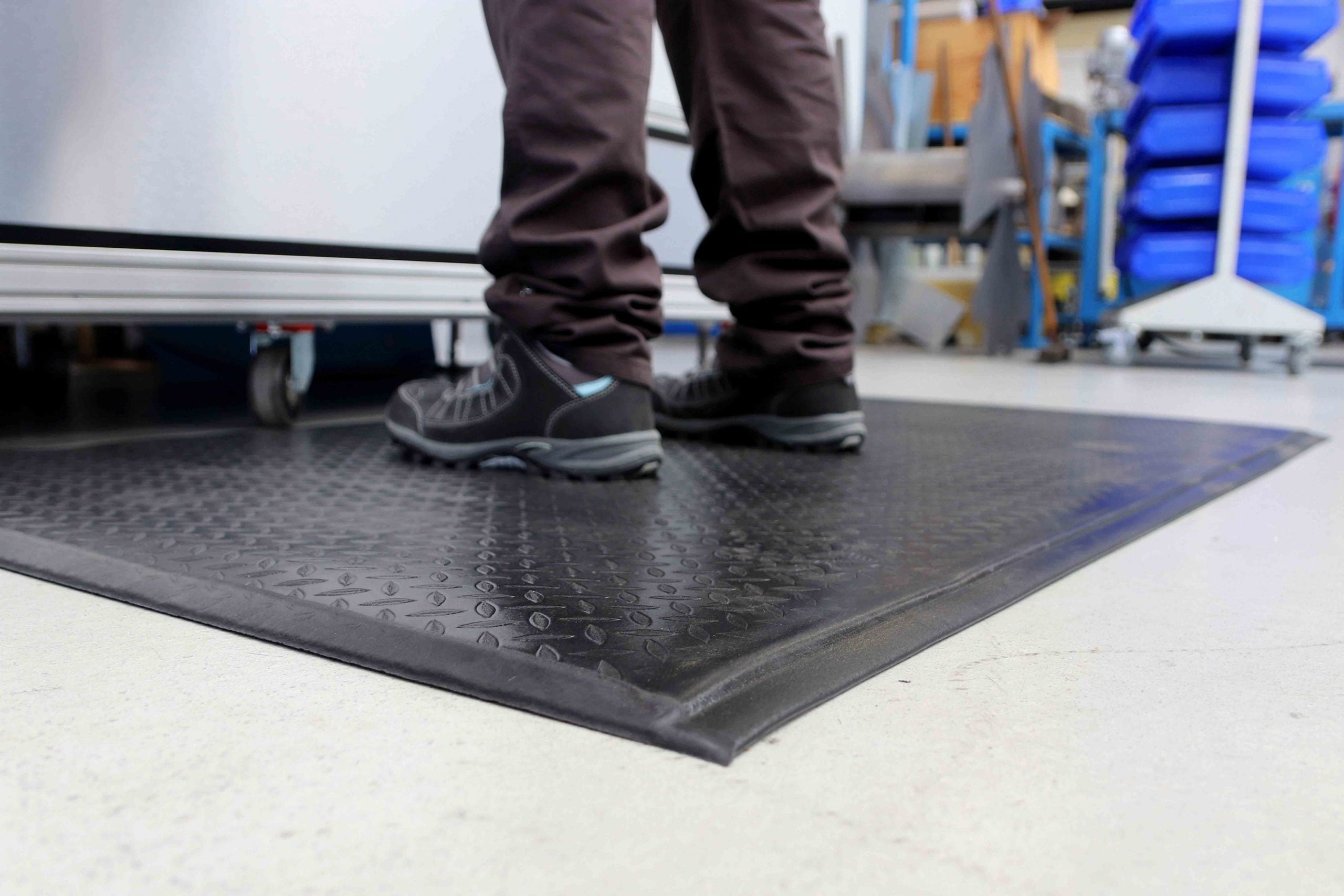
Anti-fatigue mats are frequently selected based on price, appearance or general assumptions rather than how they will perform in specific working conditions. Factors such as floor type, foot traffic, workstation layouts, movement patterns, contamination risks and cleaning processes all influence the performance of workplace matting.
Even when the right anti-fatigue mat is chosen, poor installation can significantly reduce its effectiveness.
The result is often premature matting failure, ongoing fatigue issues, increased replacement cycles, operational disruption and unnecessary waste, all of which undermine sustainability objectives.
This is why COBA promotes a Right Mat, First Time approach, helping businesses choose workplace matting that is suited to the environment from the start.
Why the Cheapest Option Often Creates the Most Waste
Low-cost anti-fatigue mats may appear similar initially, but long-term performance is where the difference becomes clear.
When workplace matting fails prematurely, the real cost extends far beyond the purchase price. Businesses must manage replacements, downtime, disruption, product disposal and ongoing performance issues.
This can lead to:
- Frequent anti-fatigue mat replacement
- Increased operational costs
- Reduced workplace performance
- Higher levels of waste
- Customer dissatisfaction
- Reputational damage
Sustainability is not achieved through the lowest upfront cost. It comes from selecting anti-fatigue matting that performs reliably over time and reduces the need for repeated replacement.
Choosing the right ergonomic matting is a long-term investment in employee wellbeing, operational efficiency and sustainable workplace performance.
Every Working Environment Requires a Different Solution
No two workplaces operate in exactly the same way.
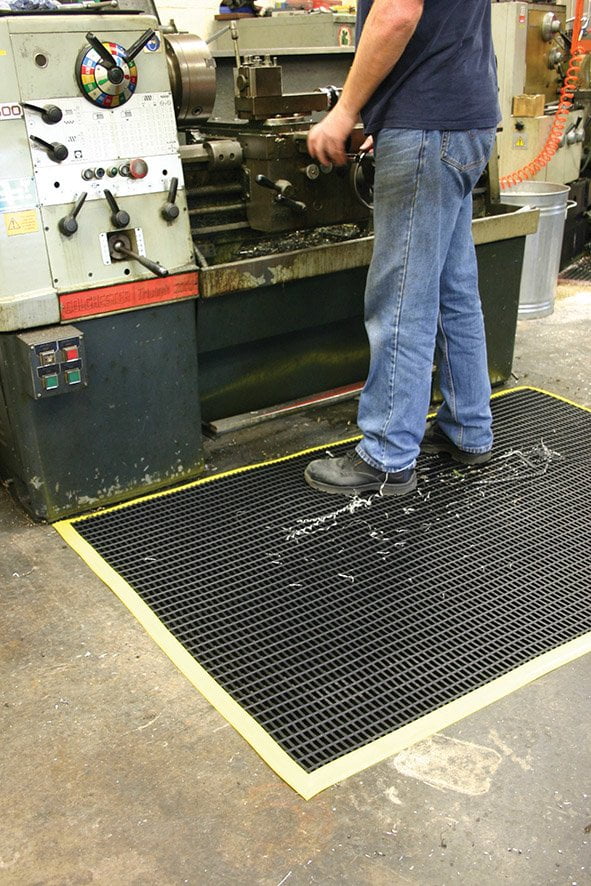
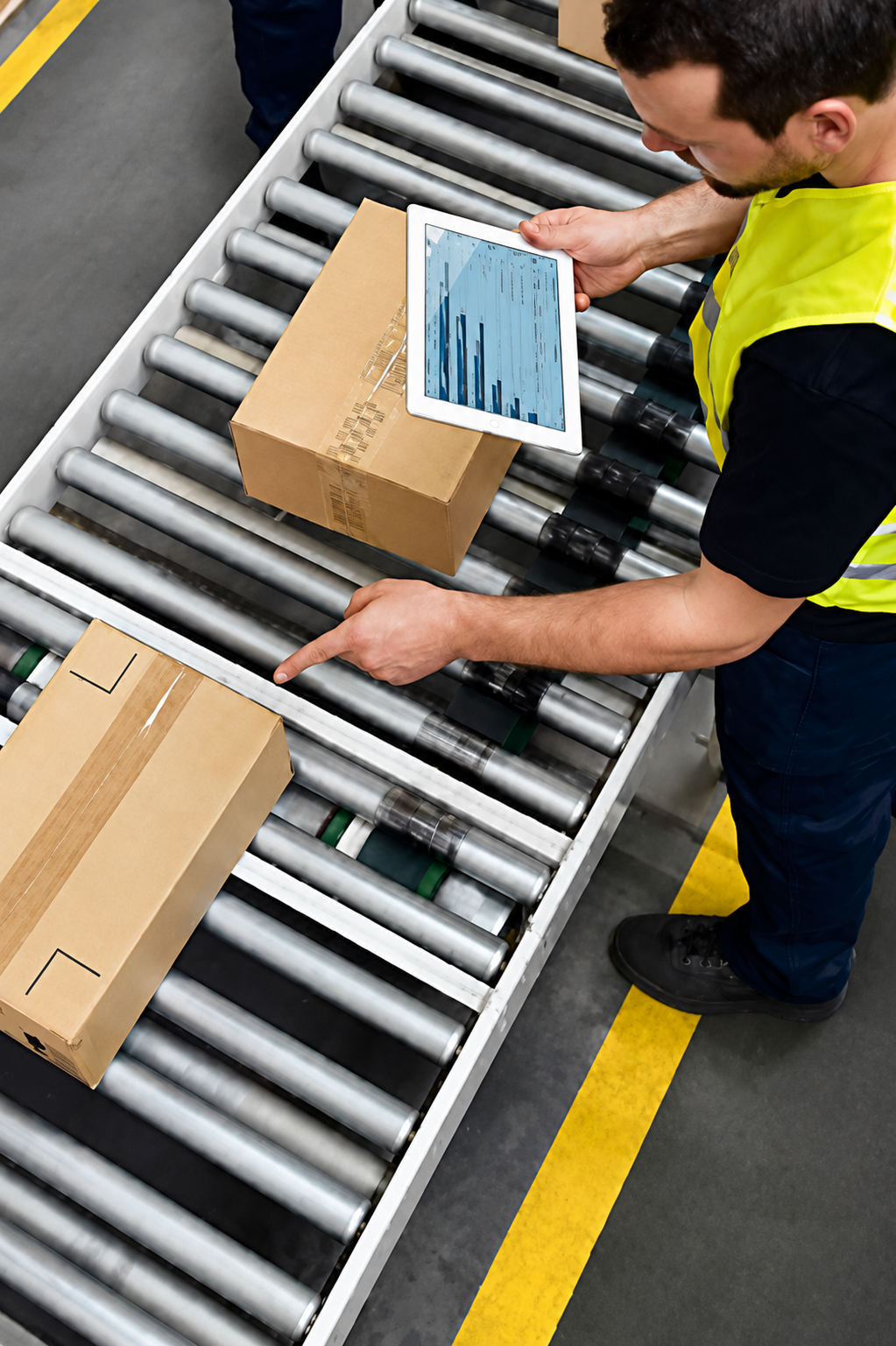
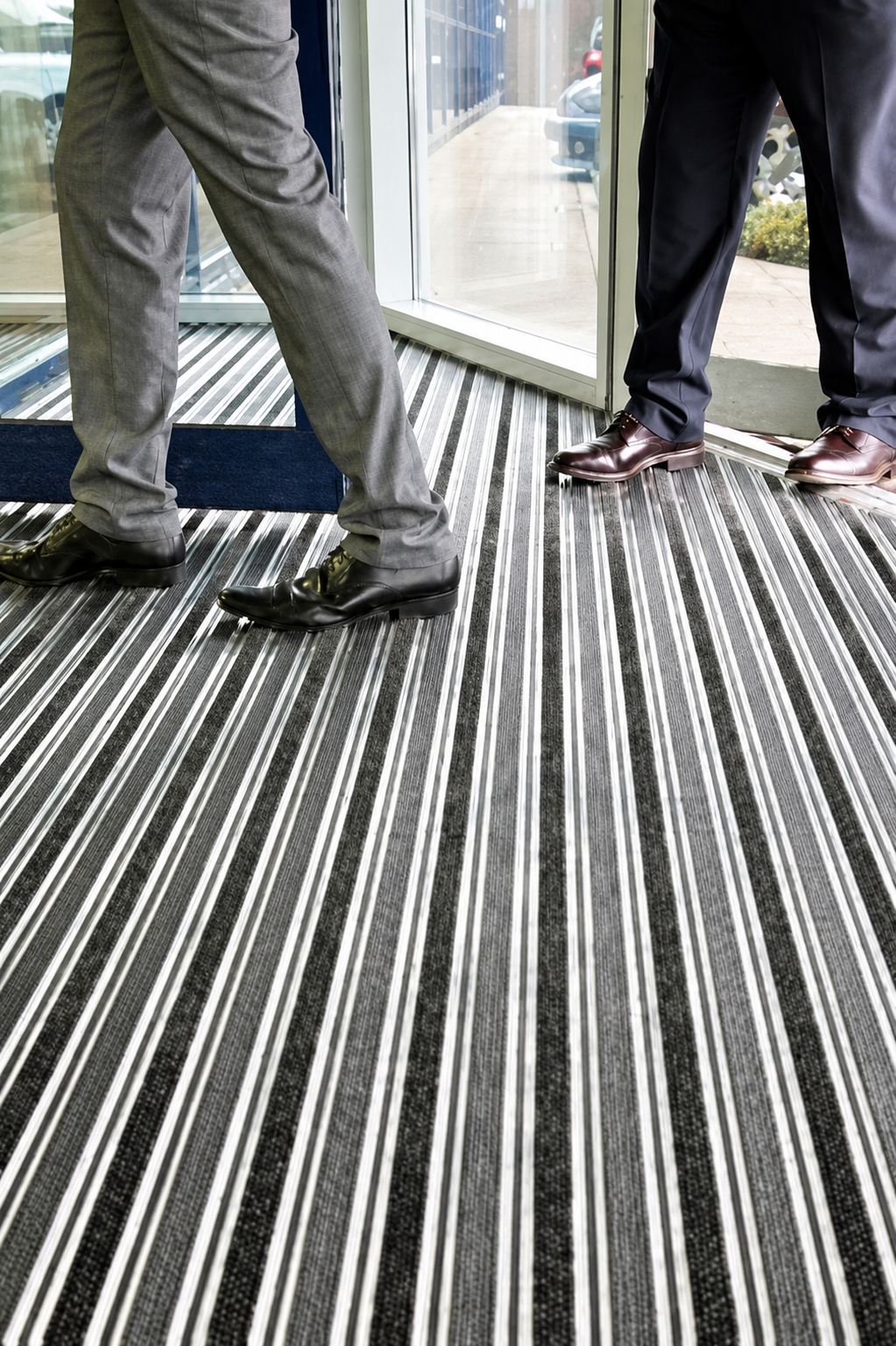
An anti-fatigue mat that performs well in one environment may fail completely in another. Heavy industrial areas, static workstations, wet environments, production lines and high-traffic walkways all place different demands on workplace matting.
Without properly assessing the environment, businesses risk investing in anti-fatigue matting that is unsuitable for the application.
This is where professional site visits become invaluable.
By assessing real working conditions first-hand, businesses can identify the most effective anti-fatigue mat for the environment. This helps improve performance, extend product lifespan and avoid costly specification mistakes.
For broader workplace requirements, COBA also offers a range of workplace matting designed to support safety, comfort and performance across different applications.
Installation Determines Long-Term Performance
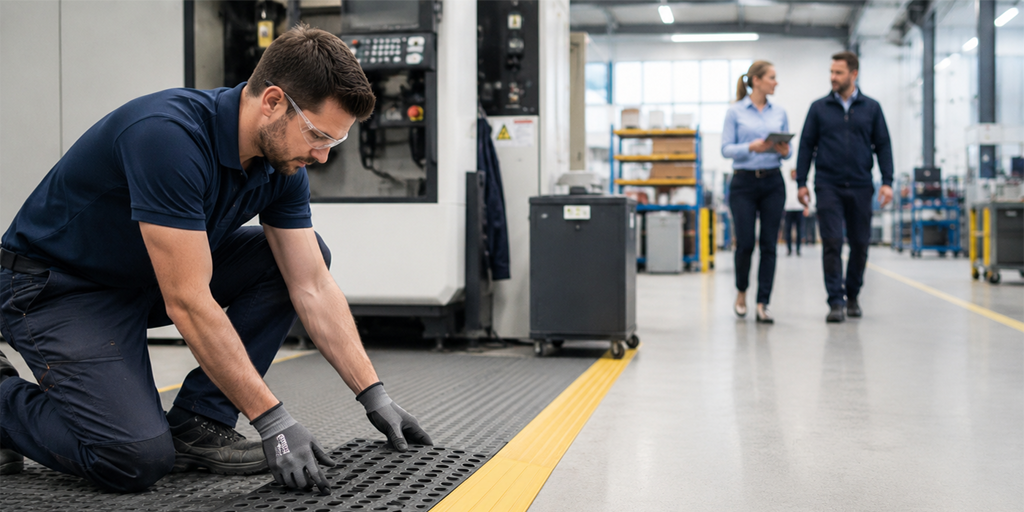
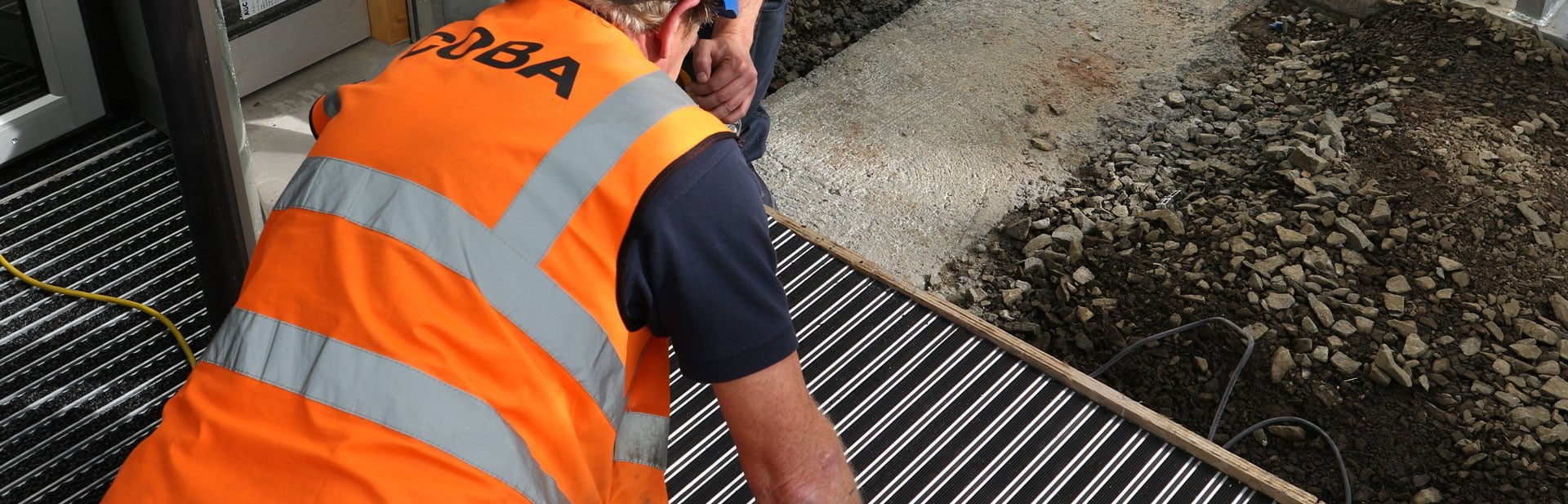
Selecting the right anti-fatigue mat is only part of the process. Correct installation is what allows the matting to perform as intended.
Incorrect fitting, poor placement or unsuitable installation methods can compromise safety, reduce ergonomic effectiveness, limit durability and shorten the lifespan of workplace matting.
Professional anti-fatigue mat installation helps ensure:
- Mats are positioned correctly
- Workplace movement is fully considered
- Safety risks are minimised
- Performance is maximised
- Product lifespan is extended
A professionally installed anti-fatigue mat is more likely to remain stable, perform consistently and support employees effectively over time.
This not only improves operational performance but also supports sustainability goals by reducing avoidable waste and replacement cycles.
A site assessment helps remove guesswork from the process of choosing anti-fatigue matting.
Instead of selecting a mat based only on appearance, price or general product descriptions, a site visit allows the working environment to be assessed properly. This includes understanding where employees stand, how they move, what risks are present and how the matting will need to perform every day.
A professional site assessment can help identify:
- The most suitable anti-fatigue mat for the application
- The correct size, placement and layout
- Potential slip, trip or movement risks
- Cleaning and maintenance requirements
- Areas where ergonomic matting will have the most impact
- Opportunities to improve safety and long-term performance
This helps businesses make better decisions before purchasing, reducing the risk of unsuitable workplace matting, premature replacement and unnecessary waste.
To make the process easier, businesses can request a site survey to get professional guidance before choosing anti-fatigue matting.
For projects where correct fitting is essential, COBA’s supply and install service helps ensure workplace matting is installed professionally from the start. Businesses can also refer to COBA’s installation guides for additional guidance.
High-Performing Workplaces Take a More Complete Approach
High-performing workplaces do not rely on anti-fatigue mat selection alone. They focus on the entire process, including assessment, specification, testing, installation and long-term performance.
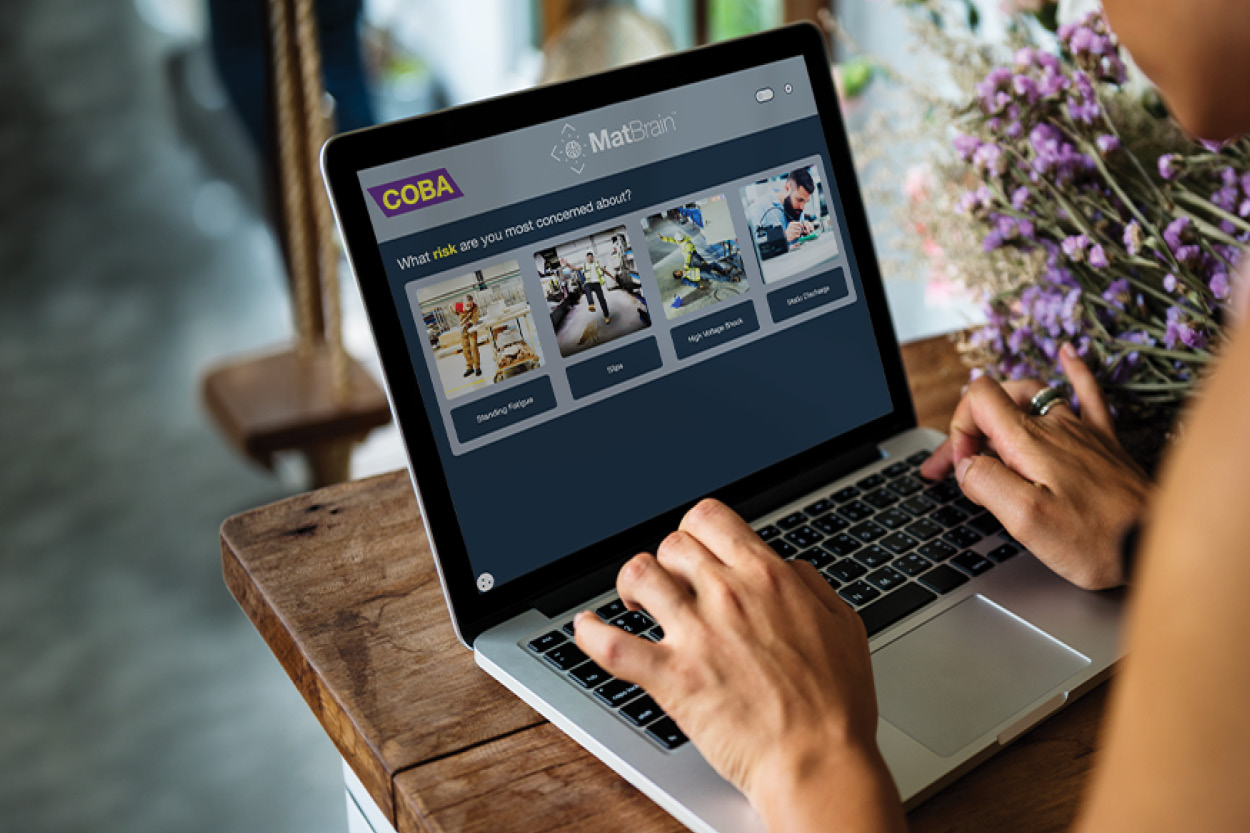
Site visits provide the insight needed to recommend the right anti-fatigue mat from the start. Product sampling allows businesses to test ergonomic matting in real-world conditions before committing. Decision-support tools such as COBA’s MatBrain™ help businesses make informed, data-driven decisions with greater confidence.
Together, these services remove uncertainty and help businesses move away from reactive purchasing towards long-term investment in the right workplace matting.
Before making a final decision, businesses can also request a sample to test whether a specific anti-fatigue mat is suitable for their working environment.
Sustainability Means Getting the Right Mat First Time
True sustainability is about longevity, performance and reducing unnecessary waste throughout the product lifecycle.
When workplace environments are properly assessed, the right anti-fatigue matting is selected and installation is completed professionally, businesses benefit from:
- Longer-lasting matting performance
- Reduced waste and replacement
- Improved employee wellbeing
- Better operational efficiency
- Lower long-term costs
Choosing the right anti-fatigue mat first time helps prevent the cycle of buying, replacing and disposing of unsuitable matting. It also helps businesses protect employees, reduce disruption and create safer, more comfortable working environments.
Site visits and professional anti-fatigue mat installation are not additional paid-for services at COBA. They are essential parts of creating safer, higher-performing and more sustainable workplaces.
That is the difference between simply supplying a mat and delivering a complete workplace matting solution designed for long-term performance.