NEW PRODUCTS 2026 - Now available - Take a look

Ground Protection vs Temporary Roadway Systems: Which Solution Is Right for Your Project?

Split image showing a construction truck struggling through muddy ground beside a smoother temporary access roadway designed for heavy site vehicles.They Look Similar. Their Jobs Are Very Different.

A project manager needs access.

The question is:

What kind of access?

Many organisations researching temporary access solutions quickly discover two common options:

  • Ground protection systems
  • Temporary roadway systems

At first glance, they often appear to solve the same problem.

Both help improve site access.

Both support vehicle movement.

Both help protect the ground.

Yet selecting the wrong solution can lead to unnecessary costs, operational challenges and reduced performance.

Understanding the difference is often the first step towards creating safer, more reliable temporary access.


The Real Problem Isn't Access. It's Matching the Solution to the Environment.

Ground conditions vary.

So do project requirements.

A festival organiser has very different access requirements compared to a civil engineering contractor.

A workforce walkway faces different demands to a temporary haul road.

This is why access mats vs temporary roadways should never be viewed as interchangeable products.

The most effective solution depends on:

  • Vehicle type
  • Load requirements
  • Traffic frequency
  • Ground conditions
  • Duration of use
  • Environmental considerations

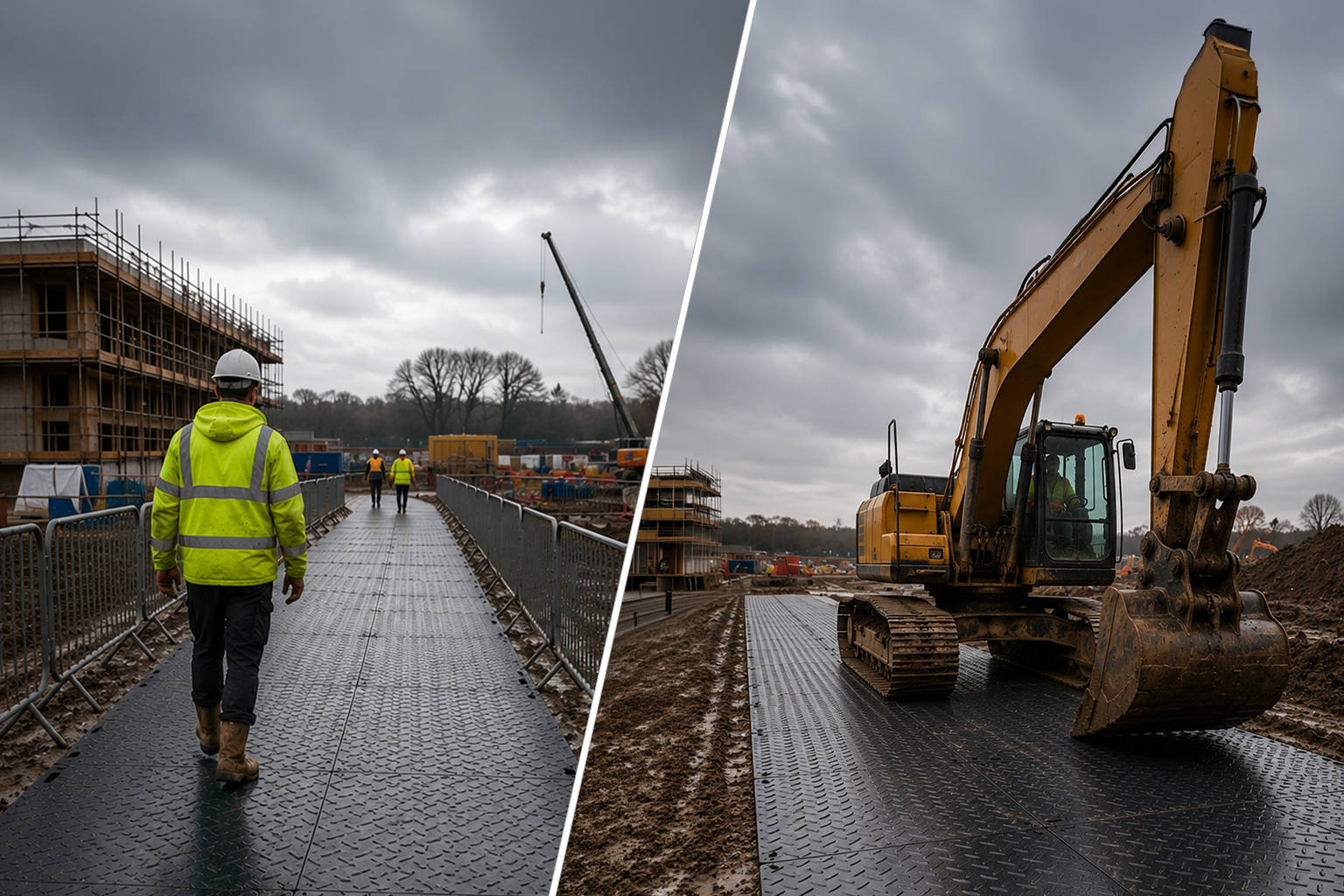
Ground protection mats supporting both pedestrian access and heavy vehicle movement.

What Are Ground Protection Systems?

Ground protection systems are designed to help protect underlying surfaces while supporting access across challenging ground conditions.

Typical applications include:

  • Temporary walkways
  • Outdoor events
  • Parks and recreational areas
  • Construction compounds
  • Light vehicle routes
  • Workforce access

Ground protection mats help distribute weight while reducing rutting, surface damage and environmental impact.

They are often selected when:

  • Ground preservation is important
  • Pedestrian movement is required
  • Fast deployment is beneficial
  • Surface protection is a priority

What Are Temporary Roadway Systems?


Temporary roadway systems are designed to support more demanding vehicle access requirements.

They are often used where projects require:

  • Repeated vehicle movement
  • Heavy machinery access
  • Long access routes
  • Construction logistics routes
  • Infrastructure works
  • Utility projects

Temporary roadway mats and trackway systems help create more stable routes for heavy equipment while reducing the risk of vehicles becoming restricted by poor ground conditions.

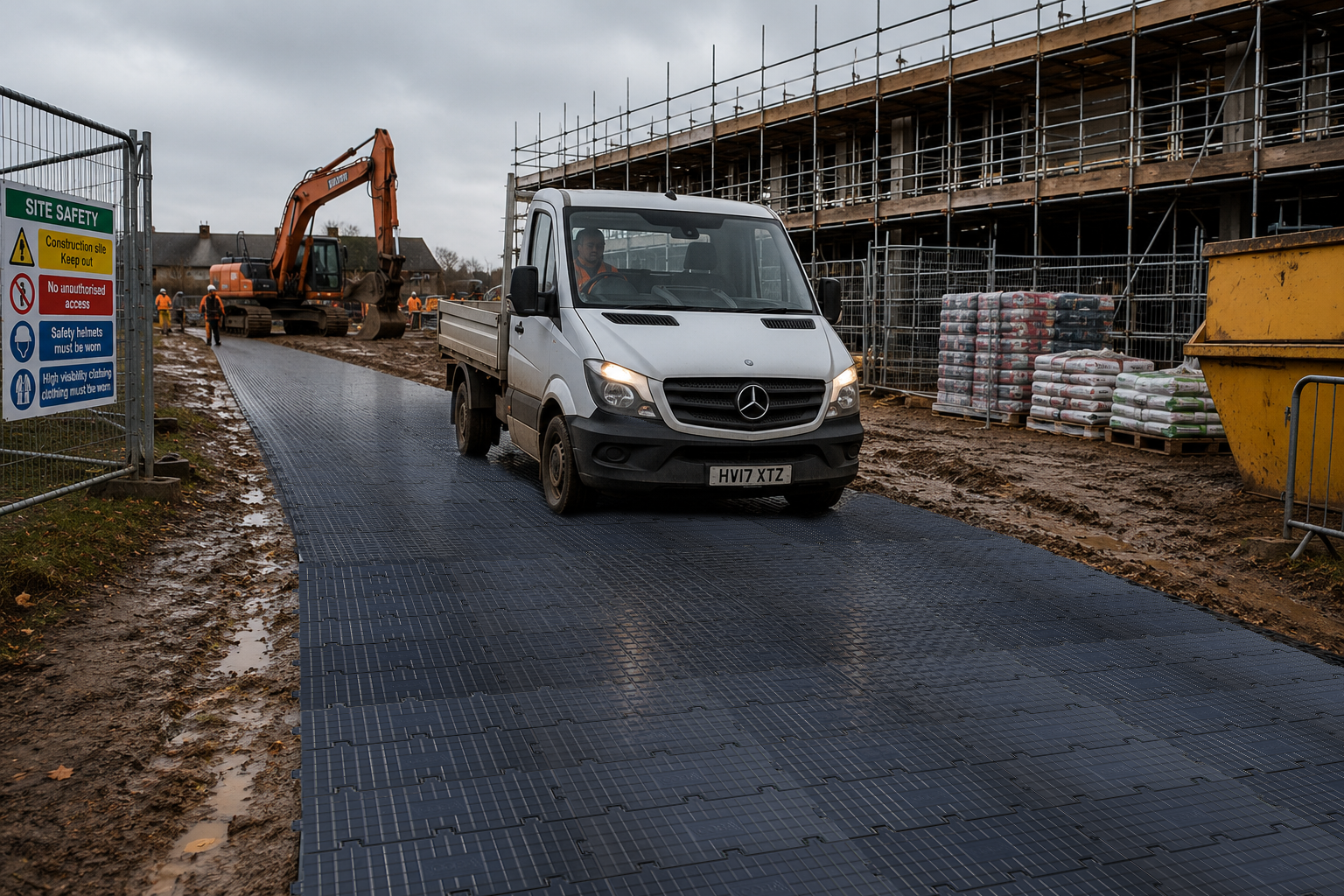
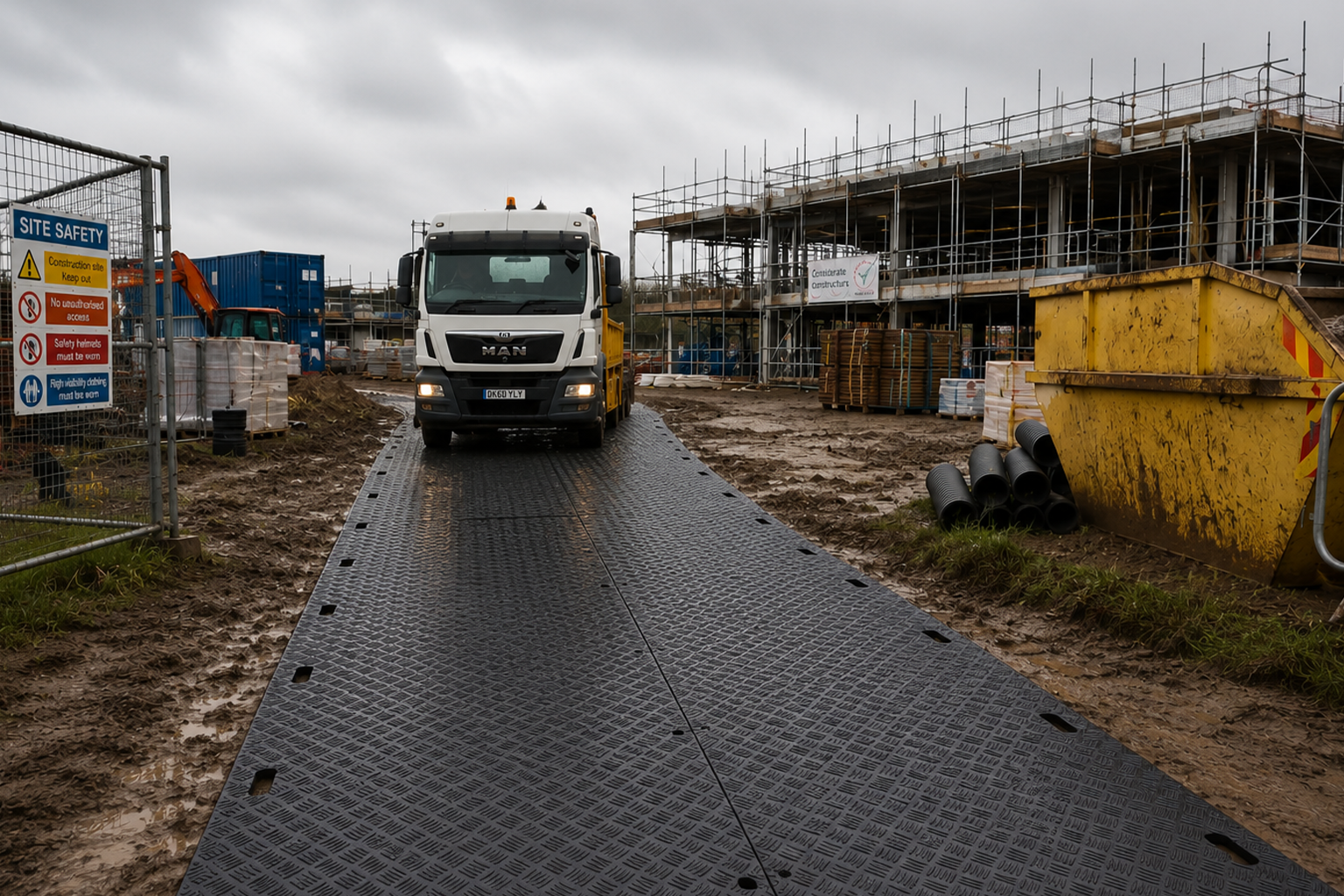
Heavy-duty access mats supporting vehicle movement during wet weather.

Ground Protection Mats vs Roadway Systems: Key Differences

Primary Objective

Ground Protection Systems: Protect the ground while supporting access.

Temporary Roadway Systems: Create reliable vehicle access across challenging conditions.

Typical Users

Ground Protection Systems:

  • Event organisers
  • Facilities teams
  • Contractors
  • Site managers

Temporary Roadway Systems:

  • Civil engineering contractors
  • Infrastructure projects
  • Utilities providers
  • Heavy construction operations

Vehicle Requirements

Ground protection mats often support lighter traffic and mixed-use environments.

Temporary roadway systems are generally selected when heavier vehicle loads and repeated traffic movements are expected.

Ground Conditions

Both solutions perform effectively on soft ground.

The difference lies in the level of support required by the application.

When Should You Choose Ground Protection Systems?

Ground protection systems are often the best choice when:

  • Protecting grass and surfaces is important
  • Pedestrian access is required
  • Vehicle traffic is relatively light
  • Installation speed matters
  • Environmental impact needs to be reduced

Typical examples include:

  • Outdoor events
  • Temporary compounds
  • Public spaces
  • Site welfare access routes

Ground protection mats supporting pedestrian access while protecting grass surfaces.

When Should You Choose Temporary Roadway Systems?

Temporary roadway systems are often the better choice when:

  • Heavy vehicle movement is expected
  • Machinery access is critical
  • Routes are heavily trafficked
  • Ground conditions are challenging
  • Operational continuity is essential

Typical examples include:

  • Infrastructure projects
  • Utilities works
  • Wind farm developments
  • Heavy construction sites

The Cost of Choosing the Wrong Solution

The biggest risk isn't choosing a poor product.

It's choosing the wrong product for the environment.

This can lead to:

  • Unnecessary spend
  • Reduced performance
  • Vehicle restrictions
  • Increased ground damage
  • Project delays
  • Additional reinstatement costs

The best temporary access systems are selected based on project requirements rather than assumptions.

The Right Access Solution Keeps Projects Moving

Ground protection systems and temporary roadway systems are both valuable temporary access solutions.

The difference lies in what you're trying to achieve.

If protecting the ground is the priority, ground protection mats may be the better option.

If supporting heavy vehicle movement is critical, temporary roadway systems may provide the greater benefit.

The most successful projects understand that access isn't simply about getting from A to B.

It's about maintaining productivity, safety and operational continuity throughout the project lifecycle.

Explore Temporary Access Solutions

Discover ground protection mats, temporary roadway systems and trackway solutions designed to support safer movement across demanding environments.

Continue Learning

  • Ground protection
  • Temporary access
  • Construction site safety
  • Seasonal site preparation

Stay Up to Date

Get the latest floor safety articles, product updates and offers.


    We don’t spam and will never sell your data. Please read our privacy policy.

    Get in Touch

    Email: sales@coba.com • Telephone: 01788 228 555

    Follow us on Social