NEW PRODUCTS 2026 - Now available - Take a look

Preventing Slips on Industrial Walkways: A Practical Guide to Safer Workplace Access

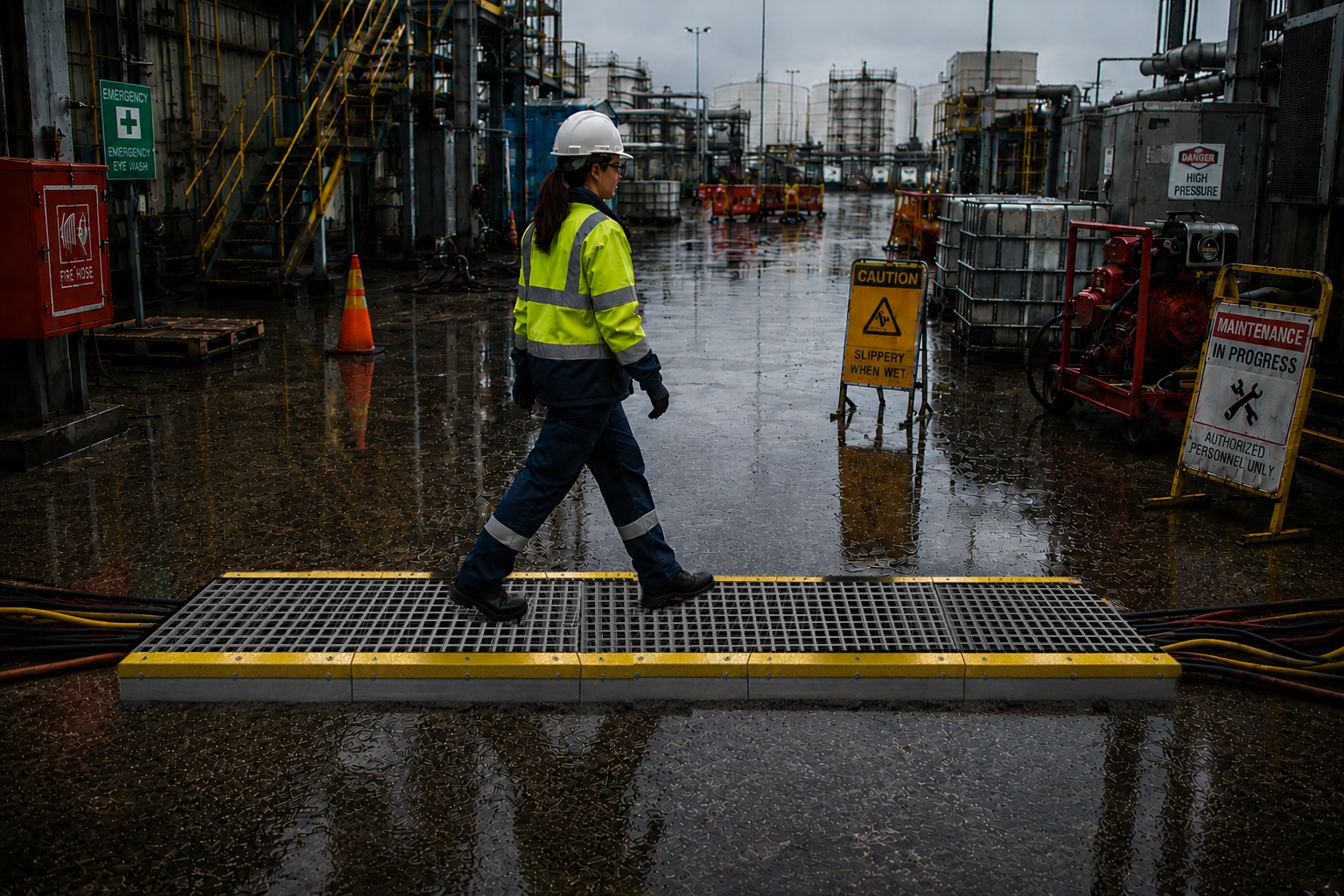
Worker safely crossing industrial cables and pipes using a Stepover crossing platform.Most Walkway Hazards Start Small

Few workplace incidents begin with a major failure.

More often, they start with something simple.

A cable stretched across a walkway.

A pipe routed through a maintenance area.

A temporary hose installed during routine work.

Individually these hazards may seem minor.

Together they can create unsafe access routes that increase the risk of slips, trips and operational disruption.

The challenge is not simply identifying hazards.

It's maintaining safe movement around them.

Why Industrial Walkways Become Unsafe

Industrial environments change constantly:

  • Maintenance work.
  • Temporary installations.
  • Equipment upgrades.
  • Contractor activity.

Over time these changes can introduce hazards into areas originally designed for safe pedestrian movement.

Common causes of industrial walkway incidents include:

  • Cables crossing walkways
  • Pipework creating trip hazards
  • Uneven surfaces
  • Temporary maintenance works
  • Poor visibility
  • Wet conditions

Without appropriate controls, even routine tasks can become higher-risk activities.

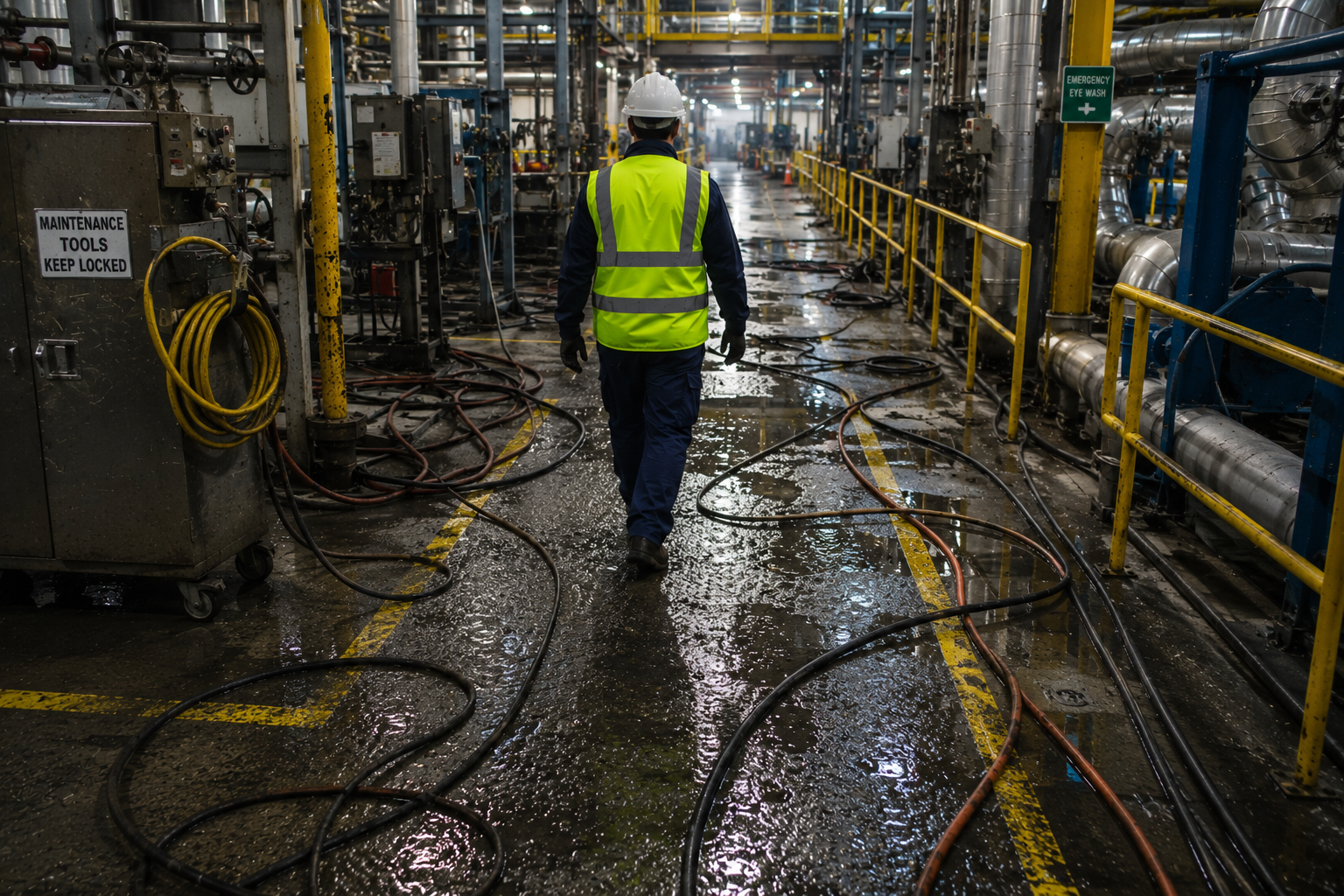
Industrial walkway containing cables and hoses that create trip risks for workers.

The Hidden Cost of Workplace Trip Hazards

When people think about slips and trips, they often focus on injury risk.

But the impact can be much broader.

Trip hazards can contribute to:

  • Lost productivity
  • Operational disruption
  • Investigation time
  • Equipment damage
  • Increased safety concerns
  • Reputational impact

Preventing slips on industrial walkways is not only a safety objective.

It is also an operational one.


Why Temporary Hazards Often Become Permanent Problems

One of the most common workplace challenges is that temporary arrangements have a habit of staying in place.

A cable is routed across a walkway for a short-term task.

A hose is installed during maintenance.

A pipe creates a minor obstruction.

Weeks later, people have simply learned to walk around it.

The problem is that familiarity does not remove risk.

It often hides it.


Creating Safer Pedestrian Routes

The most effective approach is often to maintain safe movement rather than simply warning people about hazards.

This means:

Keeping Walkways Clear

Reducing unnecessary obstacles wherever possible.

Improving Route Visibility

Helping workers clearly identify safe pathways.

Providing Safe Crossings

Allowing people to move safely over unavoidable hazards such as cables and pipes.

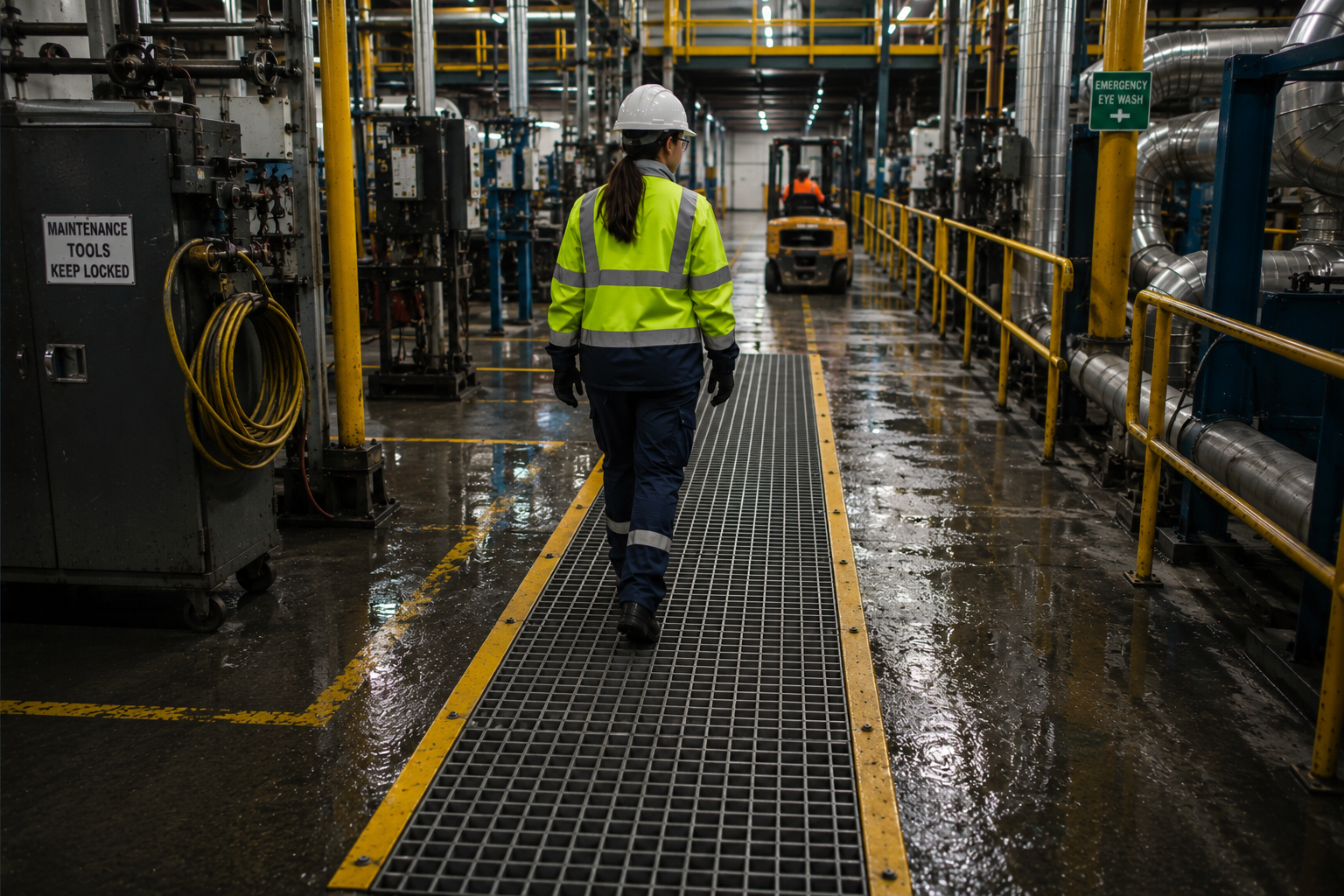
Industrial worker using a Stepover crossing platform to safely navigate workplace hazards.

Industrial Walkway Safety During Maintenance Activities

Maintenance environments present unique challenges:

  • Temporary equipment.
  • Additional cables.
  • Restricted access routes.
  • Increased foot traffic.

These factors can significantly increase the likelihood of slips and trips.

Providing dedicated crossing points helps maintain safer pedestrian movement while allowing maintenance work to continue efficiently.


Safety Shouldn't Slow Work Down

One reason trip hazards often remain unresolved is the perception that fixing them will create operational inconvenience.

The opposite is often true.

Safe access routes help:

  • Improve workflow
  • Reduce disruption
  • Support maintenance activities
  • Improve workforce confidence
  • Reduce avoidable risk

The best solutions support both safety and productivity.

Preventing Slips Starts With Better Access

Workplace safety is often viewed as a compliance exercise.

In reality, it begins with how people move through an environment.

Reducing trip hazards, creating safer crossing points and maintaining clear access routes can significantly improve industrial walkway safety.

Because the safest route is often the one that allows people to keep moving with confidence.

Explore Safer Walkway Solutions

Discover practical solutions designed to help reduce trip hazards and improve pedestrian safety across industrial environments.

Stay Up to Date

Get the latest floor safety articles, product updates and offers.


    We don’t spam and will never sell your data. Please read our privacy policy.

    Get in Touch

    Email: sales@coba.com • Telephone: 01788 228 555

    Follow us on Social