NEW PRODUCTS 2026 - Now available - Take a look

Safer Rooftop and Maintenance Access Routes: Supporting Safe Movement at Height

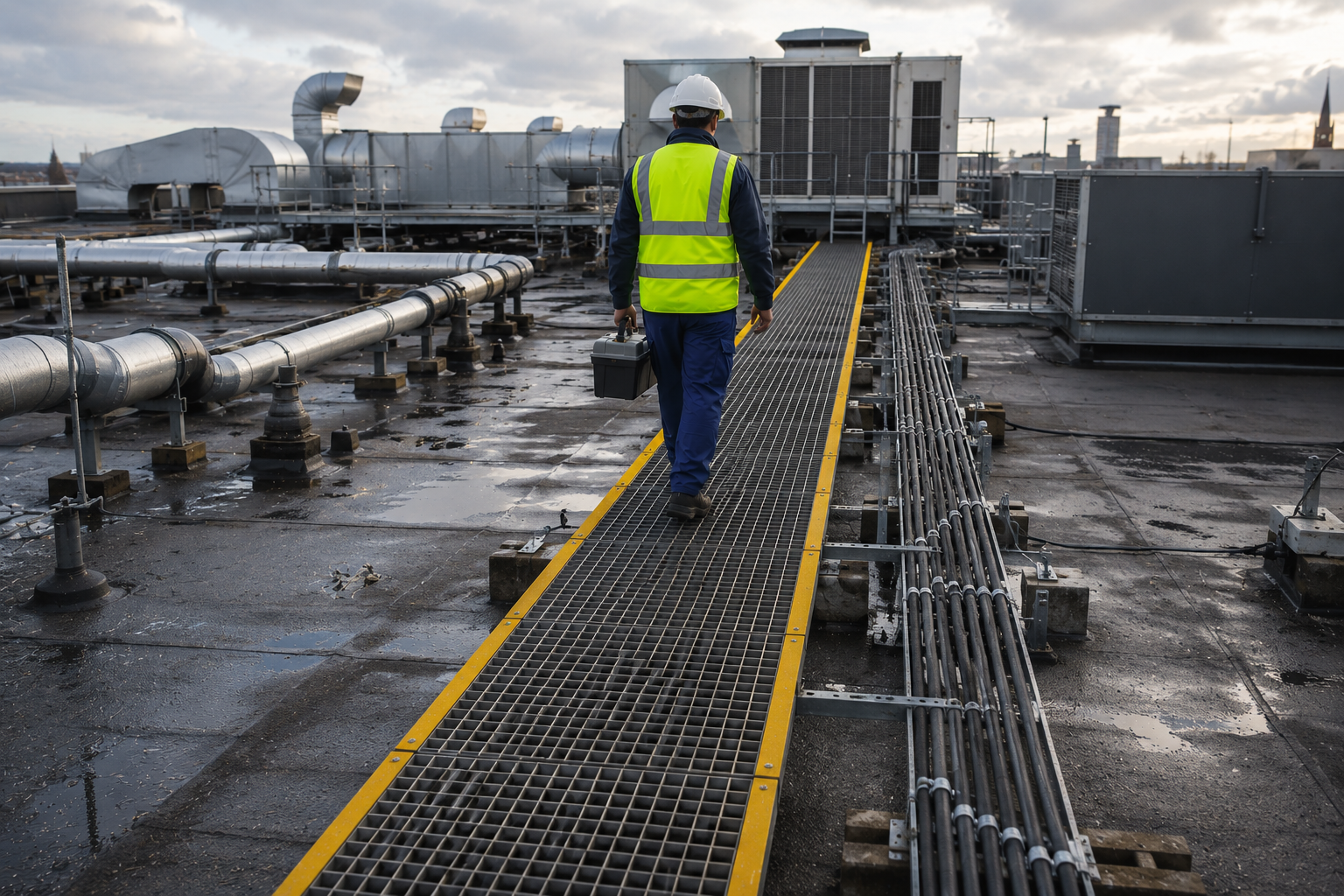
Maintenance technician using a designated rooftop access route to reach rooftop equipment.

Getting Onto The Roof Is Only Half The Journey

Most rooftop safety planning focuses on access.

  • Ladders.
  • Stairs.
  • Hatches.

But once somebody reaches the roof, the real challenge begins.

Maintenance teams often need to navigate around:

  • HVAC equipment
  • Pipework
  • Solar installations
  • Electrical services
  • Rooftop plant
  • Temporary maintenance activities

The route between access points and equipment is where many risks can emerge.

Creating safer rooftop and maintenance access routes helps support safer movement once work begins.


Why Rooftop Routes Become High-Risk Areas

Roofs are rarely empty spaces.

As buildings evolve, additional equipment is installed and maintenance requirements increase.

Over time this can create:

  • Complex access routes
  • Trip hazards
  • Restricted walkways
  • Obstructed maintenance paths
  • Increased working at height risks

The challenge is not simply accessing the roof.

It's moving around it safely.
The Hidden Risk Between Equipment and Access Points

A technician may safely reach the roof.

The next challenge is reaching the equipment.

Many incidents occur during routine movement between:

  • Access hatches
  • HVAC units
  • Solar arrays
  • Communications equipment
  • Maintenance zones

When routes are unclear or obstructed, risk increases.

Safe movement should not rely on workers remembering where hazards exist.


Creating Safer Rooftop Access Routes

Effective rooftop access routes help workers move confidently between key areas.

Key considerations include:

Route Visibility

Safe routes should be clearly identifiable.

Hazard Management

Obstacles should be avoided or crossed safely.

Consistent Access

Routes should remain usable throughout maintenance activities.

Worker Confidence

People should be able to focus on the task, not the route.

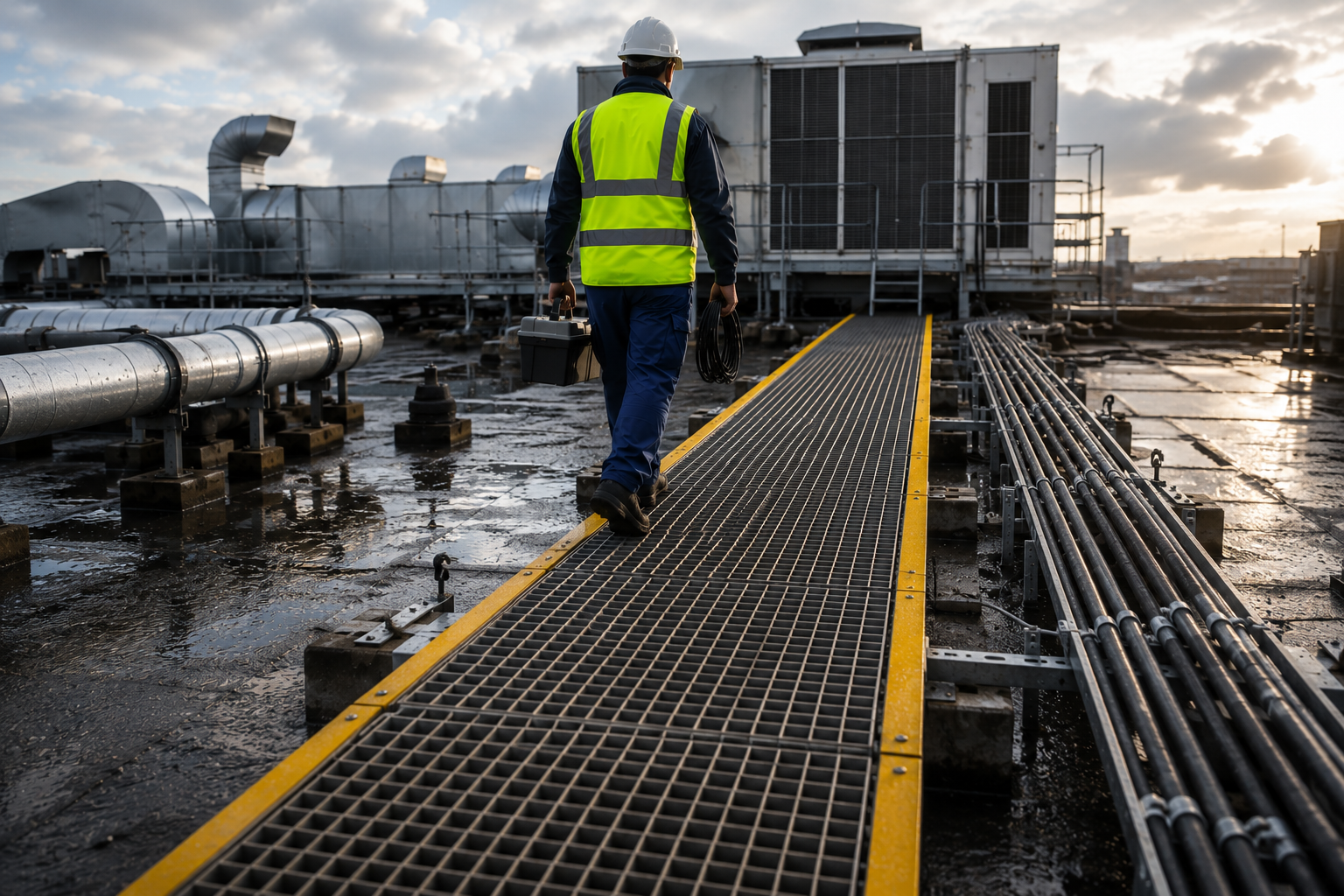
Maintenance worker safely crossing rooftop pipework on a designated access route.

Maintenance Activities Create Additional Challenges

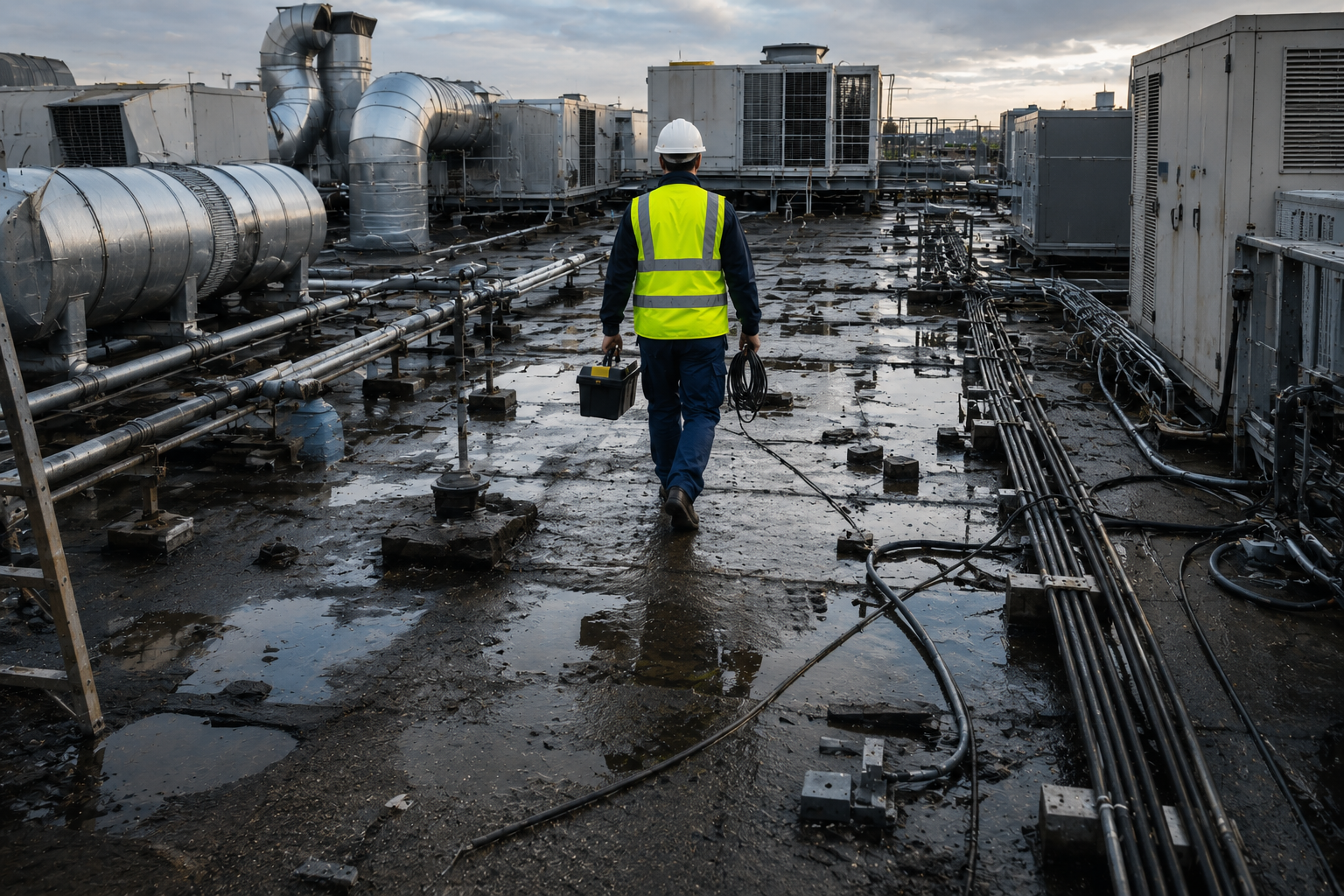
Routine maintenance often introduces temporary hazards.

Examples include:

  • Temporary cables
  • Inspection equipment
  • Additional pipework
  • Service hoses
  • Temporary work zones

Without suitable planning, these can affect access and increase trip risks.

Providing dedicated crossing points helps maintain safer movement while allowing maintenance activities to continue efficiently.


Why Rooftop Safety Is About More Than Compliance

Many organisations view rooftop safety through a compliance lens.

The reality is broader.

Safer access routes help:

  • Improve maintenance efficiency
  • Reduce disruption
  • Support worker confidence
  • Improve productivity
  • Reduce avoidable risk

The safest route is often the route that people naturally choose to use.


Better Access Supports Better Maintenance

Maintenance teams perform best when they can focus on the job rather than navigating hazards.

Creating safer rooftop and maintenance access routes helps support safer movement, reduce workplace risks and improve operational efficiency.

Because rooftop access should not stop at getting onto the roof.

It should continue all the way to the task.

Stay Up to Date

Get the latest floor safety articles, product updates and offers.


    We don’t spam and will never sell your data. Please read our privacy policy.

    Get in Touch

    Email: sales@coba.com • Telephone: 01788 228 555

    Follow us on Social