GB
GB


The People Who Stand the Most: A Global Report on Standing Workers and Workplace Health

Across Europe and industrial economies, millions of workers spend the majority of their working day on their feet. From manufacturing lines and airport security to retail counters and commercial kitchens, prolonged standing remains one of the most common yet overlooked physical demands in the workplace.
While much of the modern workplace health discussion focuses on sedentary office environments, standing work presents its own set of health, safety and productivity challenges. Workers who stand for long periods, particularly on hard surfaces such as concrete or tile flooring, frequently experience fatigue, lower back pain and strain on joints and muscles.
This research report from COBA International explores the scale of standing work across multiple industries and examines how workplace design, ergonomics and solutions such as anti-fatigue matting can support employee wellbeing and performance.
Download the Standing Workers Report
This report explores the realities of standing work across Europe and industrial economies, highlighting the health implications of prolonged standing and the practical steps organisations can take to support their workforce.
Inside the report:
- Industries with the highest number of standing workers
- The health risks associated with prolonged standing at work
- The economic impact of workplace fatigue
- Practical ergonomic interventions, including anti-fatigue matting
- How workplace design can improve comfort and productivity
Download the full report to explore the data and insights.
Download the Report
Why Standing Work Matters for Workplace Health
For workers in manufacturing, logistics, retail and hospitality, standing for long periods is often unavoidable. However, standing for extended shifts on hard flooring such as concrete can place considerable strain on the body.
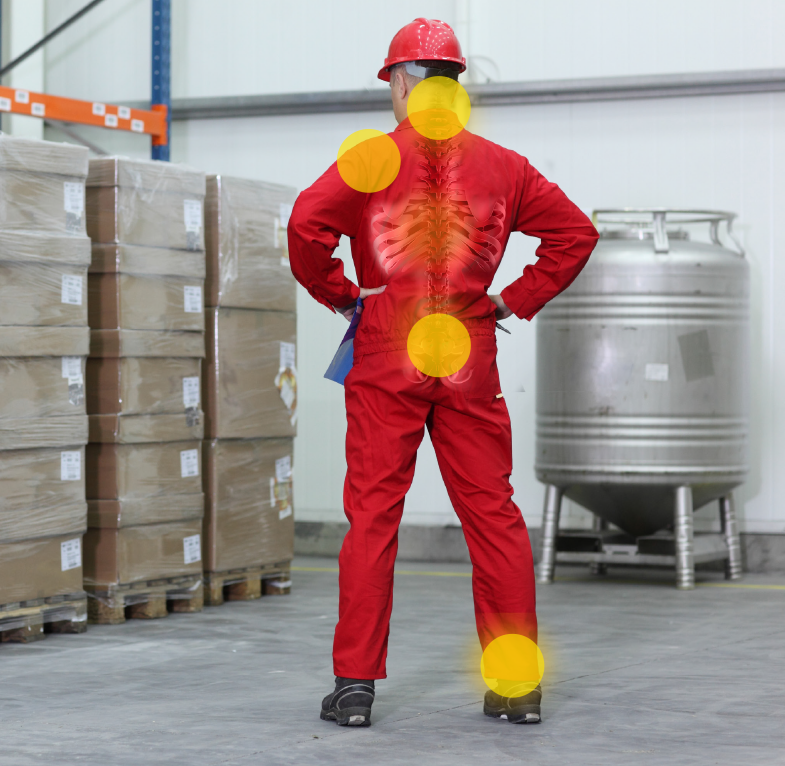
Prolonged standing is commonly linked to:
- Lower back pain
- Leg and foot fatigue
- Joint strain
- Circulatory issues
- Work-related musculoskeletal disorders (WMSDs)
Over time, these physical demands can affect both workers' well-being and productivity. As organisations increasingly prioritise employee health and operational efficiency, improving the environments where people stand has become an important consideration.
Supporting Workers Who Stand All Day
Where prolonged standing cannot be avoided, workplace design plays a critical role in reducing fatigue and improving comfort.
Employers can support standing workers through a combination of ergonomic interventions, including:
- Workstation design that encourages movement and posture changes
- Job rotation to reduce repetitive strain
- Supportive occupational footwear
- Anti-fatigue floor matting designed for industrial environments
Anti-fatigue mats are commonly used in manufacturing, food production, assembly areas and other workplaces where employees stand on hard surfaces for long periods. These mats create a cushioned standing surface that encourages subtle micro-movements in the legs and feet, helping stimulate circulation and reduce pressure on joints.
To learn more about how these solutions work, read our guide to anti-fatigue matting and how it supports standing workers
Improving Workplace Ergonomics from the Ground Up
As industries continue to prioritise worker wellbeing, ergonomics is becoming an increasingly important part of workplace design. Supporting employees who stand throughout their shift is not simply a comfort issue. It also contributes to safety, productivity and long-term workforce sustainability.
By understanding the physical demands placed on standing workers and implementing practical solutions such as anti-fatigue matting, organisations can create environments that better support the people who keep operations running.
Download the full report to explore the data behind standing work and the steps organisations can take to improve workplace ergonomics.
Stay Up to Date
Get the latest floor safety articles, product updates and offers.