ESD Floor Mats vs ESD Bench Mats: The Static Problem You Can’t See (Until It Costs You)

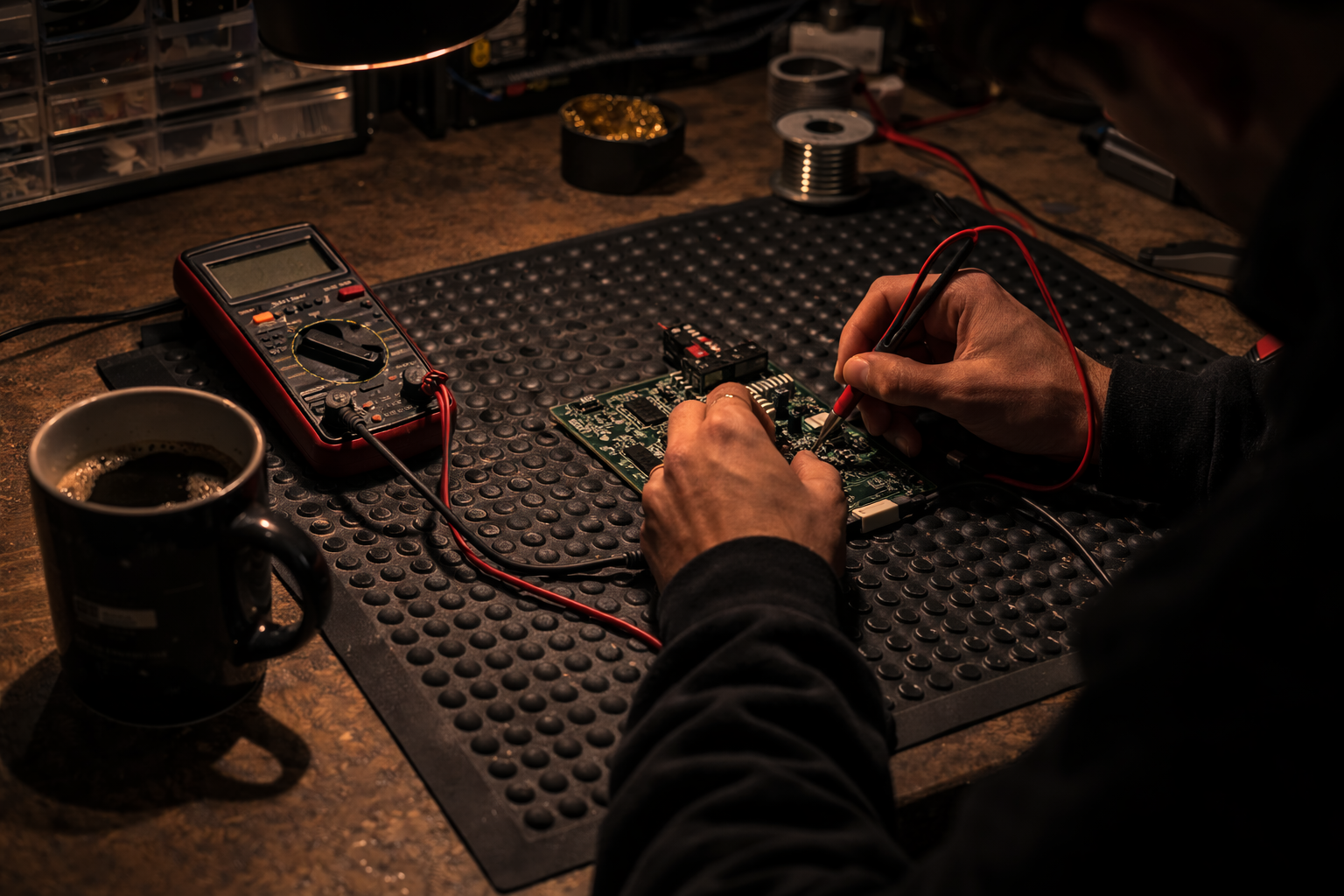
ESD bench mat vs ESD floor mat in industrial workspace

Static electricity is invisible. You don’t hear it, you don’t see it, but in electronics environments, it quietly destroys components, causes faults and leads to expensive rework.

The problem? Most workspaces only protect part of the risk.

Some focus on the floor. Others focus on the bench. Few get the full picture right.

This guide breaks it down in plain terms so you can confidently choose the right solution for your workspace.

The Hidden Threat: What ESD Mats Actually Do (Without the Jargon)

ESD Floor Mats: Stopping Static from Walking In

Think about how static builds up.
Every step, every movement, every shift of weight creates charge.

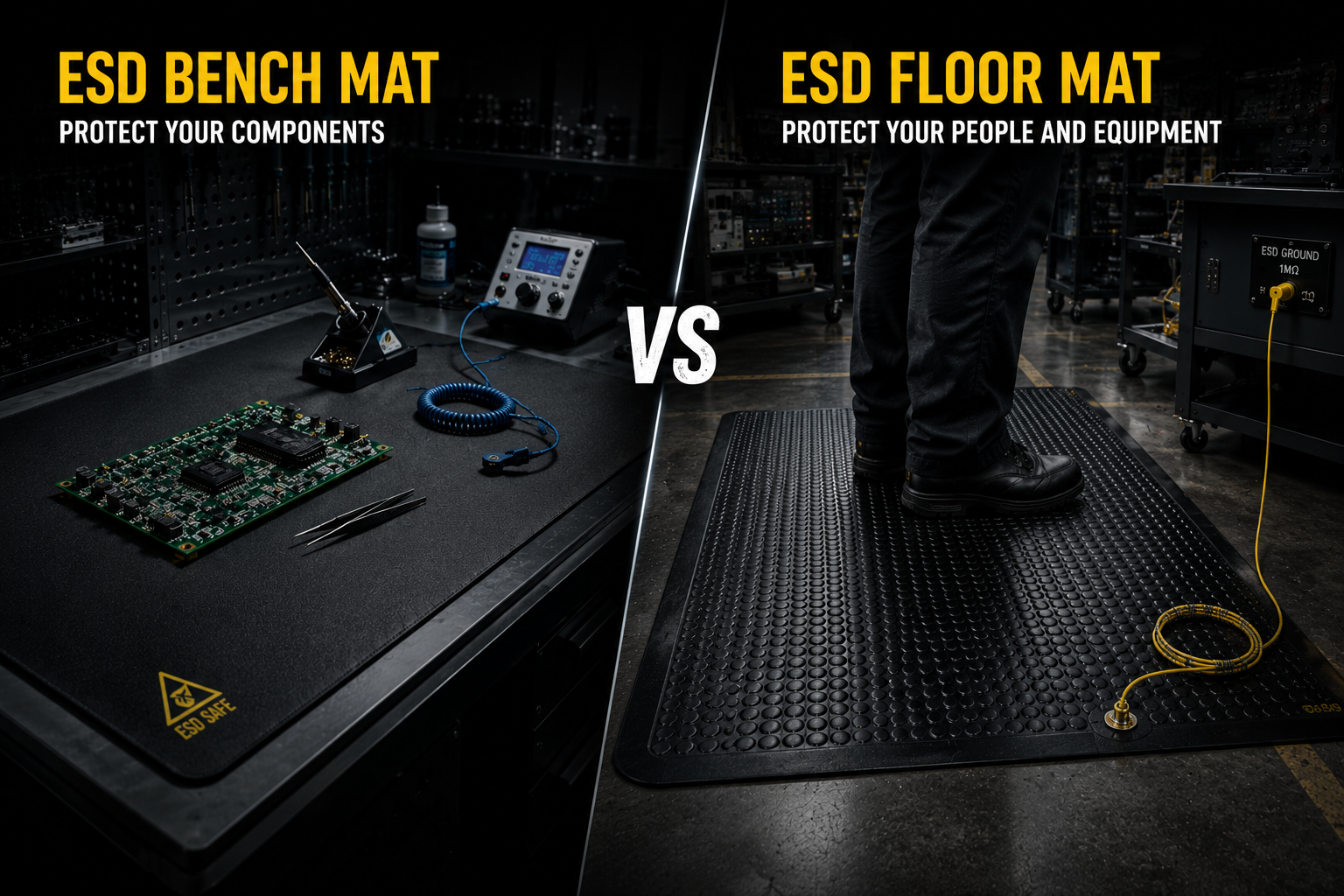
An ESD floor mat (also known as an anti-static floor mat) safely drains that charge away from the person before it becomes a problem.

Problem: People generate static just by moving
Solution: Floor mats discharge it safely through grounding
Result: Less risk of accidental shocks damaging components

ESD Bench Mats: Protecting What You’re Actually Working On

Now shift your focus to the work surface. This is where the real damage usually happens.

An ESD bench mat (also called an ESD table mat) creates a safe zone where components can be handled without sudden static discharge.

Problem: Sensitive electronics get damaged during handling
Solution: Bench mats create a controlled, grounded surface
Result: Components stay protected during assembly and repair
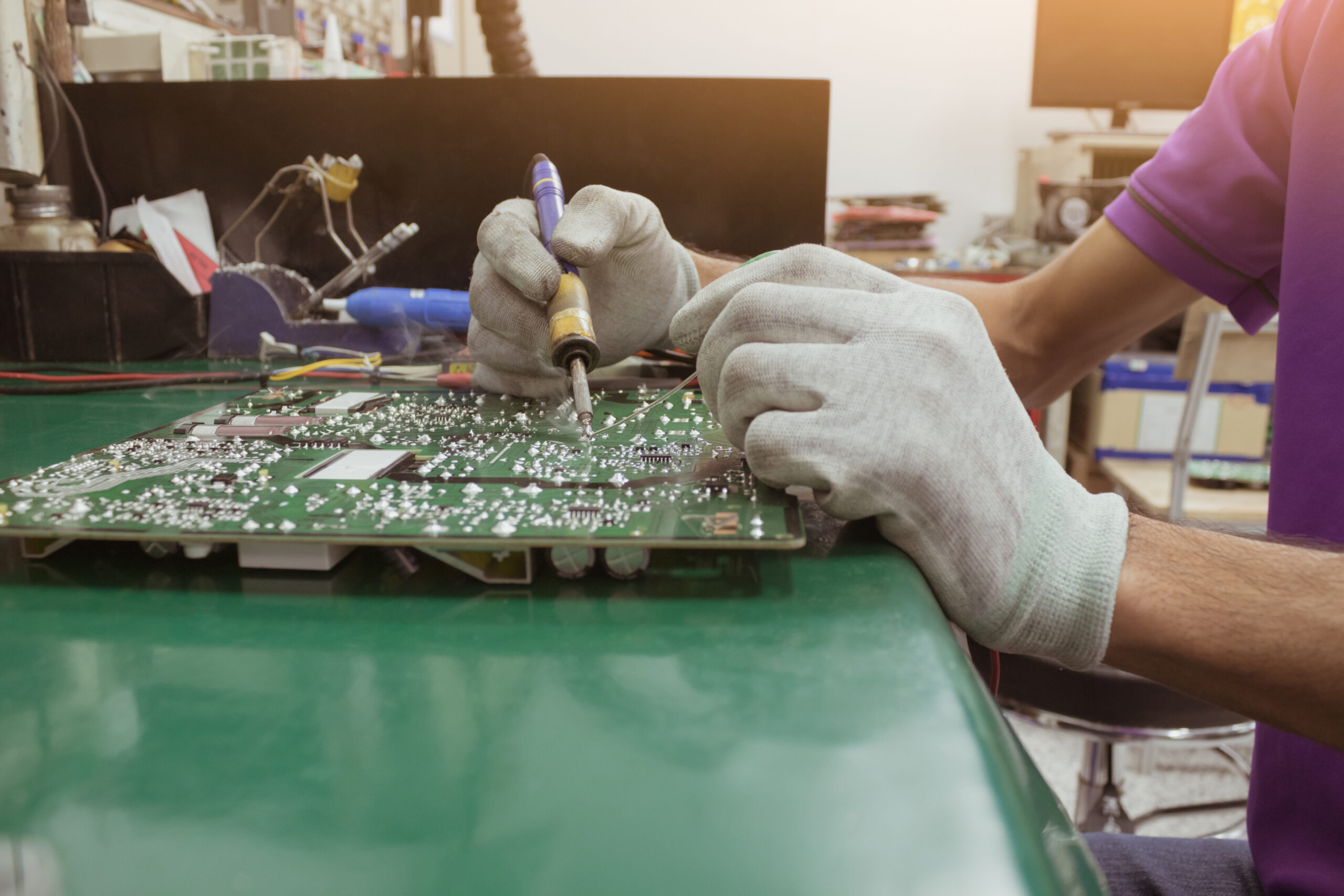
Technician working on electronics assembly with ESD mat to reduce static damage risk

Floor vs Bench Mats: Same Goal, Completely Different Jobs

This is where most confusion happens.

  • Floor mats protect people (by grounding them)
  • Bench mats protect products (at the point of contact)

If you only use one, you’re leaving a gap in your protection

Learn more about ESD grounding systems by checking out our buying guide

The Real Risk Split: People vs Products

The Movement Problem: Static Starts with People

Every time someone walks across the floor, static builds up. Without proper grounding, that charge travels with them, straight to your workstation.

That’s why floor mats are often used alongside:

Result: Static is controlled before it reaches the product

The Handling Problem: Damage Happens at the Bench

Most ESD damage happens the moment a component is touched.

That’s why bench mats are critical.

They:

  • Absorb and dissipate static instantly
  • Keep the working area controlled
  • Support compliance with ESD standards

Check out our guide on How to test ESD mats

Result: Safer handling, fewer failures, better product quality

When to Use Each (Without Overthinking It)

Use ESD Floor Mats When Movement Is the Risk

If your team is:

  • Walking between stations
  • Standing for long periods
  • Working across large areas

You need floor protection.

Common environments:

  • Manufacturing floors
  • Assembly lines
  • Electronics warehouses

Use ESD Bench Mats When Precision Matters

If your team is:

  • Handling components
  • Assembling electronics
  • Repairing circuit boards

You need bench protection.

Common environments:

  • Workbenches
  • Repair stations
  • QA and inspection areas


The Mistake Most Workspaces Make (And How to Fix It)

Here’s the reality:

  • Floor mats reduce static on people
  • Bench mats protect components
  • Static risk sits between the two

Using only one type of mat doesn’t solve the problem.

Best practice? Use both.

Result: Full protection from movement to handling

Where You’ll Typically Need Both

You’ll often see combined setups in:

  • Electronics manufacturing
  • Automotive electronics
  • Aerospace and defense
  • Repair and maintenance
  • IT and data centres

Anywhere static equals risk, both layers matter.

How to Choose the Right Setup (Quick Decision Guide)

Step 1: Look at How Your Team Works

  • Moving around → Floor mats
  • Stationary and hands-on → Bench mats

Step 2: Identify Where the Risk Sits

  • Risk from people → Floor
  • Risk from handling → Bench

Step 3: High-Value Components? Don’t Compromise

  • Use both for complete protection

You’ll need to understand the difference between ESD vs insulation mats before investing in your electrical safety solution.

Final Answer: Which One Do You Actually Need?

If you want the simplest answer:

  • Start with ESD bench mats to protect your products
  • Add ESD floor mats to control operator-generated static
  • Use both together for complete ESD safety

Don’t Guess. Build the Right ESD Setup First Time

Getting ESD protection wrong is expensive. Getting it right is straightforward when you understand the system.

Explore our full range of ESD mats and accessories

If you are still not sure what the best solution is for your site, our product selector MatBrain™ can be of assistance, or our friendly team of experts can support you with specifying the Right Mat, First Time

Stay Up to Date

Get the latest floor safety articles, product updates and offers.

    We don’t spam and will never sell your data. Please read our privacy policy.

    Email: sales@cobaafrica.com • Telephone: +27 11 452 7961 (JHB) +27 21 557 1204 (CPT)

    Follow us on social