What Is Workplace Fatigue? Causes, Risks and How to Reduce It

Workplace fatigue is more than feeling tired at the end of a shift. It is a state of physical and mental exhaustion that reduces a person’s ability to work safely, think clearly, and maintain performance over time. In environments where employees stand for long periods or perform repetitive tasks, fatigue builds quietly and often goes unnoticed until productivity drops, injuries increase, or absence rates rise.

Understanding workplace fatigue is the first step toward reducing its impact. Managing it effectively protects employee wellbeing, improves safety, and supports long-term business performance.

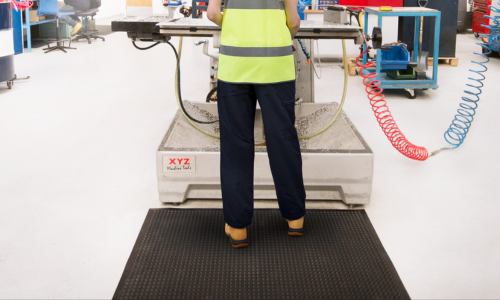
The Silent Drain on Performance You Can’t See on a Risk Register

Workplace fatigue rarely appears overnight. It develops gradually as the body is exposed to prolonged standing, static postures, hard floors, or mentally demanding tasks without adequate recovery.

Common symptoms of workplace fatigue include:

• Persistent tiredness and discomfort
• Reduced concentration and slower reaction times
• Muscle pain, joint stiffness, and lower back pain
• Declining morale and motivation
• Increased risk of errors and accidents

In industrial, retail, healthcare, and hospitality environments, fatigue is often linked to standing on hard floors for extended periods, where the body absorbs continuous impact with little opportunity for movement or relief.

When Standing Becomes a Health Risk, Not Just a Discomfort

Prolonged standing is a recognised contributor to work-related musculoskeletal disorders (MSDs). These conditions affect muscles, joints, tendons, ligaments, and the circulatory system, and they develop over time when fatigue is not properly managed.

Standing for long periods on unforgiving surfaces such as concrete restricts blood flow in the legs, increases pressure on joints, and accelerates physical fatigue. Without intervention, this can lead to chronic pain, reduced mobility, and long-term absence from work.

This is why workplace fatigue should be treated as a health and safety risk, not just an ergonomic inconvenience.

How Prolonged Standing Causes Workplace Fatigue

In many industries, workplace fatigue is strongly linked to prolonged standing. Workers who stand on hard floors for extended periods experience continuous pressure on the feet, legs and lower back.

Without adequate support, this can lead to:

  • reduced circulation in the legs
  • muscle fatigue and stiffness
  • lower back discomfort
  • reduced concentration during long shifts

This is why many workplaces introduce anti-fatigue mats to reduce the strain associated with standing for long periods.

Is Workplace Fatigue an Employer’s Responsibility?

In the UK, employers have a legal duty of care to assess and manage risks to employee health and safety, including those associated with workplace fatigue. While there is no specific law requiring employers to install anti-fatigue matting, fatigue caused by prolonged standing should be considered as part of a workplace risk assessment.

Where standing fatigue is identified as a risk factor, reasonable steps should be taken to reduce it. These steps may include changes to working practices, job rotation, improved footwear policies, and the use of appropriate ergonomic flooring solutions.

This is not about compliance alone. It is about preventing avoidable injury, reducing absence, and demonstrating a proactive approach to employee wellbeing.

How Workplace Fatigue Impacts Productivity and Safety

Fatigue affects more than physical comfort. As workers become tired, concentration levels fall and reaction times slow. This increases the likelihood of mistakes, near misses, and workplace accidents.

Businesses affected by unmanaged fatigue often experience:

• Reduced productivity and output
• Higher error rates
• Increased sick leave and staff turnover
• Greater strain on management and HR resources

Addressing workplace fatigue early helps maintain performance, supports safer working environments, and reduces long-term operational costs.

Practical Ways to Reduce Workplace Fatigue at the Source

Managing workplace fatigue requires addressing its root causes rather than treating symptoms alone. Effective strategies include:

• Encouraging regular posture changes and movement
• Allowing workers to alternate between sitting and standing where possible
• Improving workstation layout and task design
• Using ergonomic flooring solutions, such as anti-fatigue matting, that reduce strain during prolonged standing
• Providing appropriate rest breaks and recovery time

One commonly used control measure in standing environments is anti-fatigue matting, which helps reduce the physical stress associated with standing on hard floors.

How Anti-Fatigue Matting Supports Fatigue Management

Anti-fatigue matting works by providing a cushioned, supportive surface that encourages subtle movement in the feet and legs. If you’re unfamiliar with the concept, learn what anti-fatigue matting is and how it works. These micro-movements help stimulate circulation, reduce pressure on joints, and minimise muscle fatigue during prolonged standing. Many workplaces introduce anti-fatigue mats designed for industrial environments to reduce the strain associated with prolonged standing.

When correctly specified for the environment, anti-fatigue matting can:

• Improve comfort during long shifts
• Reduce strain on the lower back and legs
• Support better posture and circulation
• Help maintain focus and endurance throughout the working day

It is most effective when used as part of a broader fatigue management strategy rather than as a standalone fix.

Are Anti-Fatigue Mats Required by Law?

There is no specific legal requirement in England and Wales that obliges employers to provide anti-fatigue mats. However, employers are required to assess workplace risks and take reasonable steps to reduce them.

Where prolonged standing has been identified as a fatigue risk, introducing anti-fatigue matting is a widely accepted and practical control measure. Its use can demonstrate a proactive approach to managing fatigue-related risks in the workplace.

From Fatigue to Focus. What Good Fatigue Management Looks Like

When workplace fatigue is addressed properly, the results are measurable. Employees experience less discomfort, maintain concentration for longer periods, and recover more effectively between shifts. For employers, this translates into safer working environments, improved productivity, and reduced absence over time.

Fatigue management is not about quick fixes. It is about recognising the problem, applying the right controls, and creating working environments that support people as well as performance.

Next Steps. Understanding Standing Fatigue and Choosing the Right Solution

If prolonged standing is part of your working environment, the next step is understanding what anti-fatigue matting is and how it works in standing environments.

Recommended next reads:

Stay Up to Date

Get the latest floor safety articles, product updates and offers.


    We don’t spam and will never sell your data. Please read our privacy policy.

    Get in Touch

    Email: sales@coba.com • Telephone: 01788 228 555

    Follow us on Social